
Lander Platform: A New Multiparametric Underwater Observatory by the Chilean Antarctic Institute (INACH) for Real-Time Environmental Monitoring in the Southern Ocean

The use of new autonomous technologies for the continuous recording of oceanographic data is crucial for comprehensive monitoring of the Southern Ocean, especially in the current context of the climate crisis. High-resolution data acquisition is increasingly essential for assessing the impact of changes in ecosystem processes related to carbon sequestration, ocean acidification, and the recurrence and impact of heatwaves.
While the deployment of research vessels is highly valuable and necessary, these vessels face operational limitations due to high economic costs and their dependence on favorable weather conditions for navigation. These limitations become even more pronounced during winter, resulting in significant gaps in information regarding oceanographic environmental dynamics and variability during this period.
To address these information gaps, the Chilean Antarctic Institute (INACH) submitted a SOOS-endorsed proposal for acquiring a multiparametric underwater platform (Lander) under the 5th Major Scientific and Technological Equipment fund (FONDEQUIP) organized by the Science Ministry of Chile. Out of 33 projects submitted from across Chile, only five were awarded, including INACH's multiparametric Lander platform.
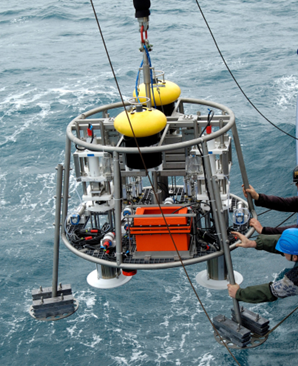
The investment exceeds $900,000 USD and the platform is projected to be operational starting from the 2025-2026 season. The Lander platform will feature state-of-the-art oceanographic equipment and will be deployed at 40-50 meters depth. It will be equipped with sensors for temperature, salinity, dissolved oxygen, fluorescence, chlorophyll-a, dissolved organic matter, turbidity, partial pressure of CO2, ADCP, hydrophones, and a robotic environmental eDNA collector.
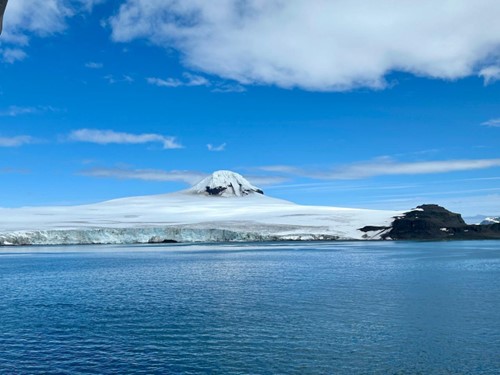
The Lander will be situated in Chile Bay (Greenwich Island, South Shetland Islands) and will provide real-time transmission of most variables. Additionally, for comparative purposes, the project plans to install a second platform with some of the same sensors in South Bay (Doumer Island), near the INACH’s station Yelcho.
Both platforms will generate data to monitor various ecosystem processes, including water mass dynamics and variability in summer and winter, the influence of glacial melting on surface stratification, ocean-atmosphere coupling, and biogeochemical exchanges in coastal regions. They will also assess the impact of these factors on microbial composition and primary production. Additionally, the platforms will detect the presence of organisms ranging from bacteria to large cetaceans and record acoustic pollution.
“Chile has made significant efforts to install this type of instrumentation in the past across various sectors of the Antarctic Peninsula, though always with simpler equipment and a limited number of sensors. This will be Chile's first platform of its kind, featuring cutting-edge technology capable of acquiring and transmitting data in real time. The Lander platform will modernize and automate our comprehensive capability for monitoring the Southern Ocean,” explains Francisco Santa Cruz, researcher at INACH's Scientific Department and project coordinator.
“This project has attracted the interest of various institutions with which we have partnered to develop a robust proposal that has been awarded. The Lander will complement the Glider, which was recently awarded through FONDEQUIP, further strengthening our monitoring capabilities in Antarctica,” says Andrés López, INACH’s Technical Deputy.
To develop this initiative, INACH has partnered with all the major institutions in Chile that have advanced and strengthened oceanographic monitoring in Antarctica over the past decades. These include the Centro de Investigación Dinámica de Ecosistemas Marinos de Altas Latitudes (IDEAL) of the Universidad Austral de Chile, the Facultad de Ciencias Biológicas of the Pontificia Universidad Católica de Chile, the Centro de Estudios Avanzados en Zonas Áridas (CEAZA), the Servicio Hidrográfico y Oceanográfico de la Armada de Chile (SHOA), and the Centro Asistencial Docente e Investigación (CADI) of the Universidad de Magallanes.
“We aim to build on the excellent work done by these institutions, collaborate effectively, and elevate environmental monitoring to the next level,” says Santa Cruz.
INACH is a technical organization under the Ministry of Foreign Affairs with full autonomy in all matters related to Antarctic scientific, technological, and outreach affairs. INACH adheres to the National Antarctic Policy by promoting the development of high-quality research, effectively participating in the Antarctic Treaty System and related forums, strengthening Magallanes as the gateway to the White Continent, and engaging in public outreach to disseminate Antarctic knowledge.