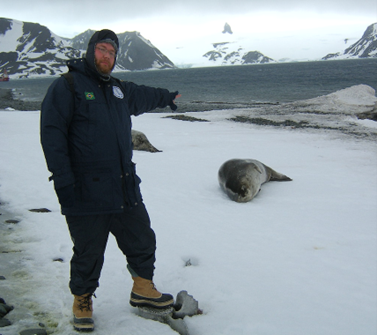
SOOS Alumni in the Spotlight: Mauricio M. Mata

Image

Alumni in the Spotlight is a SOOS series celebrating the people who have helped shape our community beyond their formal roles. Through short profiles and personal reflections, we highlight where our alumni are now, what they took from their time with SOOS, and how those experiences continue to influence Southern Ocean science and collaboration today.

We are honoured to feature Mauricio M. Mata as our next SOOS Alumni Spotlight. Mauricio is a Southern Ocean scientist whose work bridges observational oceanography, international collaboration, and Antarctic research strategy. He first became involved with SOOS around 2011–2012 as a member of the Scientific Steering Committee, during a period of expanding Antarctic Peninsula research through Brazil’s High Latitudes Oceanography Group (GOAL) and the Brazilian Antarctic Program (PROANTAR). Known for his dedication to building international networks, fostering collaboration across scientific cultures, and integrating under-ice observations into Antarctic research, Mauricio has played a pivotal role in shaping SOOS from its earliest days. 

Today, Mauricio shares reflections on building SOOS from the ground up, working across international scientific cultures, and how collaboration remains essential in Antarctic oceanography. Being part of SOOS expanded his network, inspired new projects, and influenced Brazil’s national Antarctic research strategy — showing how community-led science can leave a lasting impact.


Getting Involved

1. How did you first become involved with SOOS? 

Mauricio: At the time SOOS was being established, I was actively conducting scientific cruises through our High Latitudes Oceanography Group (GOAL), as part of the Brazilian Antarctic Program (PROANTAR) which gained momentum with our contribution to the 4th International Polar Year (IPY). In this context, colleagues from the SCAR/SCOR Expert Group in Oceanography — particularly my friend and colleague Ilana Wainer — together with PROANTAR representatives, put my name forward during the inaugural call for the SOOS Scientific Steering Committee.

Experiences and Highlights

2. What stands out to you as a highlight or memorable moment from your time with SOOS?

Mauricio: Oh! There are many, but what stands out the most I think was being part of the early construction of SOOS. Participating in the first workshops, contributing to the initial implementation documents, and working alongside outstanding scientists from around the world was both an innovative and deeply enriching experience.

3. What was the most valuable thing you learned or experienced during your involvement?

Mauricio: “Easy” - That no one does Antarctic oceanography alone! Cooperation, coordination, and the ability to work across different scientific cultures and operational approaches are not just important — they are absolutely essential. In my view, SOOS does this remarkably well.

Growth and Impact

4. How did being part of SOOS influence your career or perspective on Southern Ocean science or beyond?

Mauricio: When I joined the SOOS Scientific Steering Committee around 2011–2012, it coincided with a period when, through GOAL and PROANTAR, we were expanding our activities around the Antarctic Peninsula. Being part of SOOS significantly expanded my international network. It enabled new collaborations, student and early-career exchanges, and idea sharing — all of which led to new projects and initiatives.

This image for Image Layouts addon
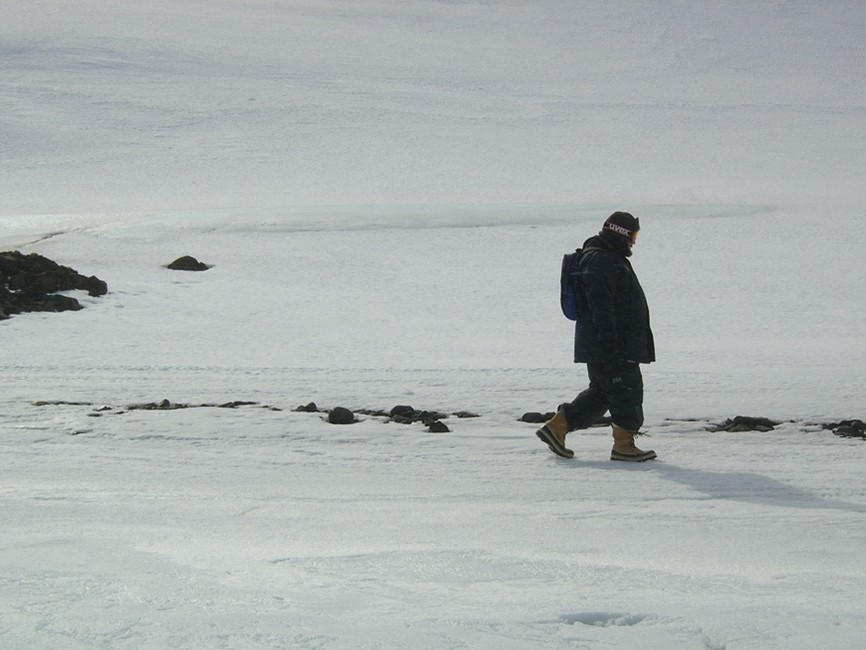
Mauricio strolling around King George Island for the first time (Jan/2003).


5. Are there particular people, projects, or experiences within SOOS that inspired you?

Mauricio: Definitely — and that’s why it’s difficult to single out specific names. Having the opportunity to collaborate and help build an observing system from the ground up, alongside leading scientists in Southern Ocean research, was a true privilege. Given that many PROANTAR activities traditionally occur up to the marginal ice zone, the SOOS International Workshop “Seeing Below the Ice” (2012) was particularly inspiring. From that point onward, we progressively incorporated some under-ice observations into our projects.

Looking Ahead

6. What are you currently working on, and how does it connect (or not!) to your time in SOOS?

Mauricio: Most of my current work in the Southern Ocean remains focused on the northern Antarctic Peninsula, studying ocean circulation, water mass formation/transformation, and variability, now supported by longer time series and well-established international collaborations. Much of this is a direct legacy of SOOS — both in terms of partnerships and ideas that emerged during those early discussions. In addition, we have been able to incorporate elements of the SOOS vision into Brazil’s national Antarctic and Southern Ocean research strategy/policy, helping to align PROANTAR initiatives with the broader international community.

7. What do you think are the biggest opportunities or challenges for SOOS in the years ahead?
Mauricio: A key challenge will be sustaining the current level of coordination and collaboration, particularly in terms of securing continuous funding to maintain and expand an observing system like SOOS. Raising awareness among key stakeholders and decision-makers about what is happening in the Southern Ocean — and how it affects the global climate system and society — remains a complex and ongoing task.

Personal Reflection / Advice

8. What advice would you give to someone just starting to engage with SOOS or Southern Ocean research?
Mauricio: Go for it! Engaging in initiatives like SOOS broadens your perspective beyond your own projects and laboratory. Dedicating time to collaborative and coordination efforts may initially feel like a loss of focus — especially at early or mid-career stages — but in my experience, the opposite is true. It expands your network, creates long-term professional relationships and friendships, and ultimately strengthens both your science and your contribution to the broader community.

9. Do you have a favourite Southern Ocean memory or photo to share?


Maurico sampling a
capsized iceberg. Weddell Sea (August/2006)


From all of us at SOOS, we thank Mauricio for his vision, dedication, and lasting impact on the SOOS community. His commitment to building collaborative networks, advancing Antarctic oceanography, and connecting national and international research efforts reflects the heart of SOOS. We are proud to count Mauricio among our alumni and look forward to seeing his continued contributions inspire and guide Southern Ocean science in the years ahead.


News article 9/April/2026/JB