SOOS Alumni in the Spotlight: Sian Henley

Image

Alumni in the Spotlight is a new SOOS series celebrating the people who have helped shape our community beyond their formal roles. Through short profiles and personal reflections, we highlight where our alumni are now, what they took from their time with SOOS, and how those experiences continue to influence Southern Ocean science and collaboration today.

We are honoured to have Sian Henley as our first featured SOOS Alumni today. Sian is a Southern Ocean scientist and educator whose work bridges research, international collaboration, and science–policy engagement. She first became involved with SOOS in 2016 as part of the WAPSA Regional Working Group and quickly after that became a Co-Chair of WAPSA. Sian later served on the SOOS Executive Committee as Vice Chair and Co-Chair, and has contributed across a wide range of SOOS activities, from community leadership to global policy conversations. Known for her commitment to inclusive, co-designed science and her ability to connect people across disciplines and borders, Sian has helped shape how SOOS operates and how Southern Ocean science shows up on the world stage. For Sian, SOOS has always been more than a network — it is a place where community, collaboration, and real-world impact come together.

Here’s a peek behind the scenes: in this Q&A, Sian shares her journey with SOOS—from her first involvement and career highlights to lessons learned, memorable experiences, and advice for the next generation of Southern Ocean researchers.


Getting Involved

1.How did you first become involved with SOOS? 

Sian: I was invited to join the WAPSA Regional Working Group in 2016 by Oscar Schofield and Kate Hendry. I became co-chair fairly shortly after that and have been swept along with the flow of all sorts of SOOS activities since then.

Experiences and Highlights

2. What stands out to you as a highlight or memorable moment from your time with SOOS?

Sian: There are so many, but the majority of them involve meetings with the amazing SOOS community: meetings with other leadership and community members from all over the world have always been a highlight of working with SOOS, and I hope they always will be!

3. What was the most valuable thing you learned or experienced during your involvement?

Sian: Wow, I could write a whole essay just for this question… if I had to choose one thing that I learned, it would be how to co-design research and scientific programs in a way that is genuinely inclusive, despite differences in research cultures, expertise, and national and individual circumstances. I honestly believe that this is something that SOOS does exceptionally well and I have loved learning from, and contributing to, that collegiate spirit.

Growth and Impact

4. How did being part of SOOS influence your career or perspective on Southern Ocean science or beyond?

Sian: Being part of SOOS, and working in several different positions, has had a significant influence on my career, both directly and indirectly. Directly, because my SOOS roles are noted on my CV and the papers I have led, or contributed to, for SOOS have boosted my research impact; but indirectly – and more importantly – because SOOS has taught me to be a good international collaborator, and because it has informed my teaching, outreach and policy work.

5. Are there particular people, projects, or experiences within SOOS that inspired you?

Sian: Yes, definitely! I am continually inspired by SOOS people from all over the world, and from the top professors to the up-and-coming rockstar ECRs. I think the project that has inspired me the most is contributing to the development of SOOS’s presence in international policy spheres like the UNFCCC and UN Oceans. It has been challenging and sometimes very nerve-wracking (like delivering my “why Antarctica and the Southern Ocean are important and need to be protected” elevator pitch to the Secretary General of the United Nations), but also a huge opportunity to make a difference in the ‘real world’ and an incredibly fulfilling experience.

This image for Image Layouts addon
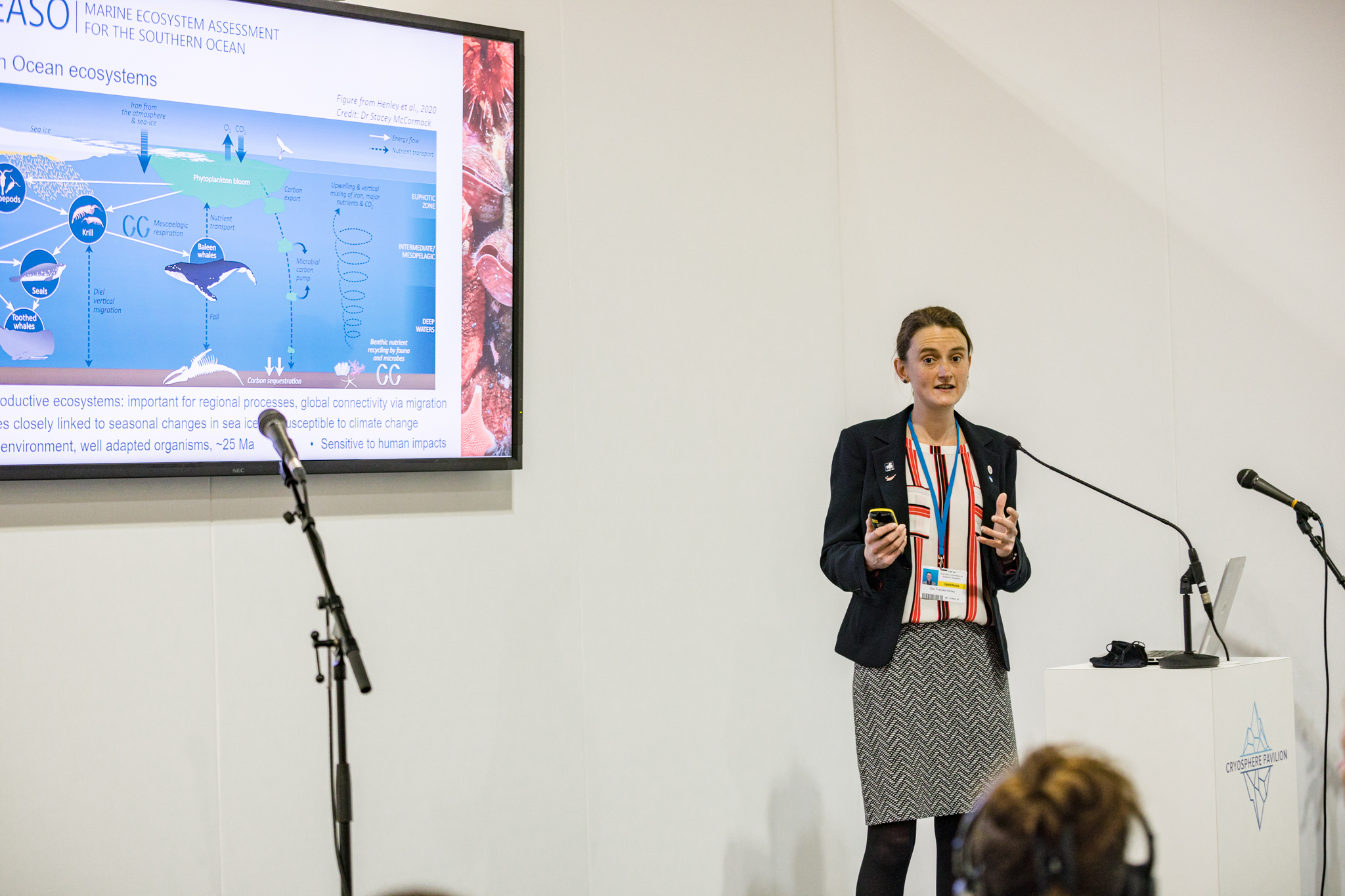
Sian presenting on the Southern Ocean at COP26 in Glasgow, December 2021 (Photo credit: Michael O. Snyder).
This image for Image Layouts addon
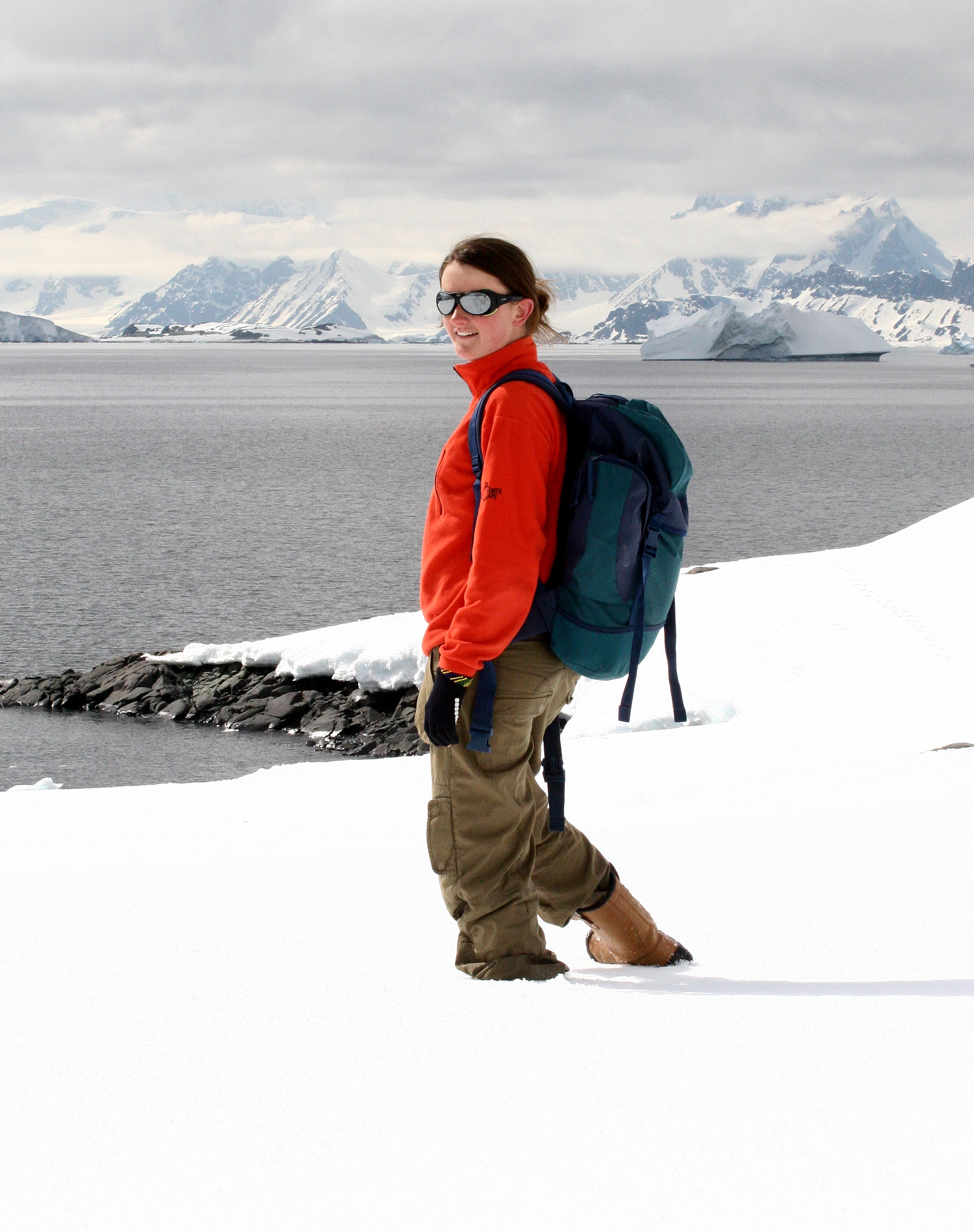
Sian on Léonie Island, Ryder Bay, during her first Antarctic field season, summer 2008/09 (Photo credit: John Loines).

Looking Ahead

6. What are you currently working on, and how does it connect (or not!) to your time in SOOS?

I am involved quite strongly in Antarctica In Sync, which definitely links to and builds from what we have been doing in SOOS. I’m also working on a grant proposal and a lead-author paper, that definitely relate to SOOS activity and hopefully will benefit many within the community – fingers crossed for both! After the Christmas break, I’ll dive into a large teaching load, in which I mention the Southern Ocean as often as possible… in one of my courses, I even do a planning exercise for an observing system in the Southern Ocean!

7. What do you think are the biggest opportunities or challenges for SOOS in the years ahead?
Ooh, that’s a tricky one. I think the biggest challenge is probably sustaining the core funding for SOOS, although the horizon looks brighter on that front than it has for a little while, so let’s hope some of the things that are in the works come to fruition! I think the biggest opportunity is for the community spirit of SOOS to really come into its own in terms of us supporting each other’s work across national, disciplinary and career-stage boundaries, by sharing cruises and other infrastructure, providing each other with cruise berths and research equipment, and working together to open up all data sources. With current funding and other constraints, now is as good a time as any to pull together as a community!

Personal Reflection / Advice

8. What advice would you give to someone just starting to engage with SOOS or Southern Ocean research?
For someone starting to engage with Southern Ocean research, I would say (and I frequently do say to students and ECRs in my group) that the Southern Ocean research community is very friendly and collaborative, so get out there and meet them! For someone starting to engage with SOOS, I would advise them to get involved in activities that excite them and they think they can contribute to, but not to do too much, so that they maintain a balance with all the other things they need to do in work and life.

9. (Optional fun one) Do you have a favourite Southern Ocean memory or photo to share?
Ha ha – so many options, but only some are appropriate for a SOOS newsletter! Being surrounded by a pod of orca whilst out sampling from a small boat was an extraordinary experience that I shall never forget. Celebrating my 30th birthday by swimming in the Southern Ocean was also very special, but don’t worry, there were no orca that day!

From all of us at SOOS, we extend our sincere thanks to Sian for her leadership, generosity, and lasting contributions to our community. Her commitment to inclusive collaboration, international partnership, and connecting Southern Ocean science to real-world impact embodies the spirit of SOOS. We are proud to count Sian among our alumni and look forward to seeing her continue to inspire, challenge, and shape the future of Southern Ocean science in the years ahead.


News article 16/Dec/2025/JB