
Triple-Threat AUV Campaigns to Dominate Beneath Thwaites Glacier This Season

An historic Antarctic field season lies ahead for the Thwaites Glacier region as not one, not two, but three of the world’s leading polar AUV teams take their incredible machines to the most extreme of marine environments this season and risk it all for critically urgent and globally significant data beneath the ‘Doomsday Glacier’.
In a magnificent example of international collaboration, the UK’s Autosub-LR (long-range) and Sweden’s Hugin ‘RAN’ teams will be aboard the US Icebreaker RSV Nathaniel B Palmer, while the Australian Explorer AUV ‘nupiri muka’ will be with the South Korean icebreaker RV Araon. All three teams have been collaborating through the SOOS Polar AUV Task Team, sharing scientific objectives and engineering best practices.
Each AUV team has a unique speciality that is being integrated to broaden the overarching outcomes from this season. Autosub-Long Range has phenomenal endurance (months) and will conduct cavity-spanning missions of up to 4 days, carrying a turbulence probe through the water column from the seafloor to the underside of the ice shelf. RAN is very proficient at bathymetric surveys and will map a wide area of the seafloor beneath the ice. And nupiri muka has a clean trace-metal water sampler, aiming to penetrate deep within the ice shelf towards the grounding zone where the majority of the ocean-driven melting is occurring.
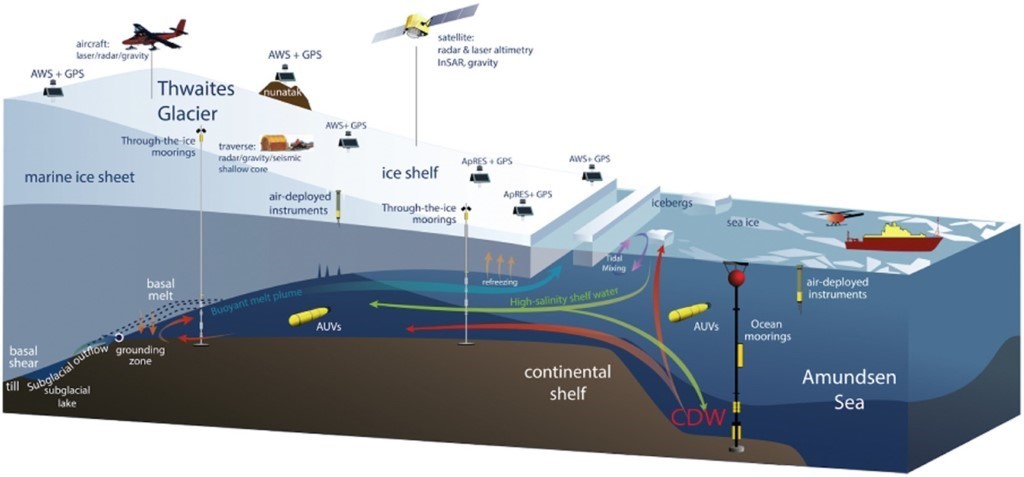
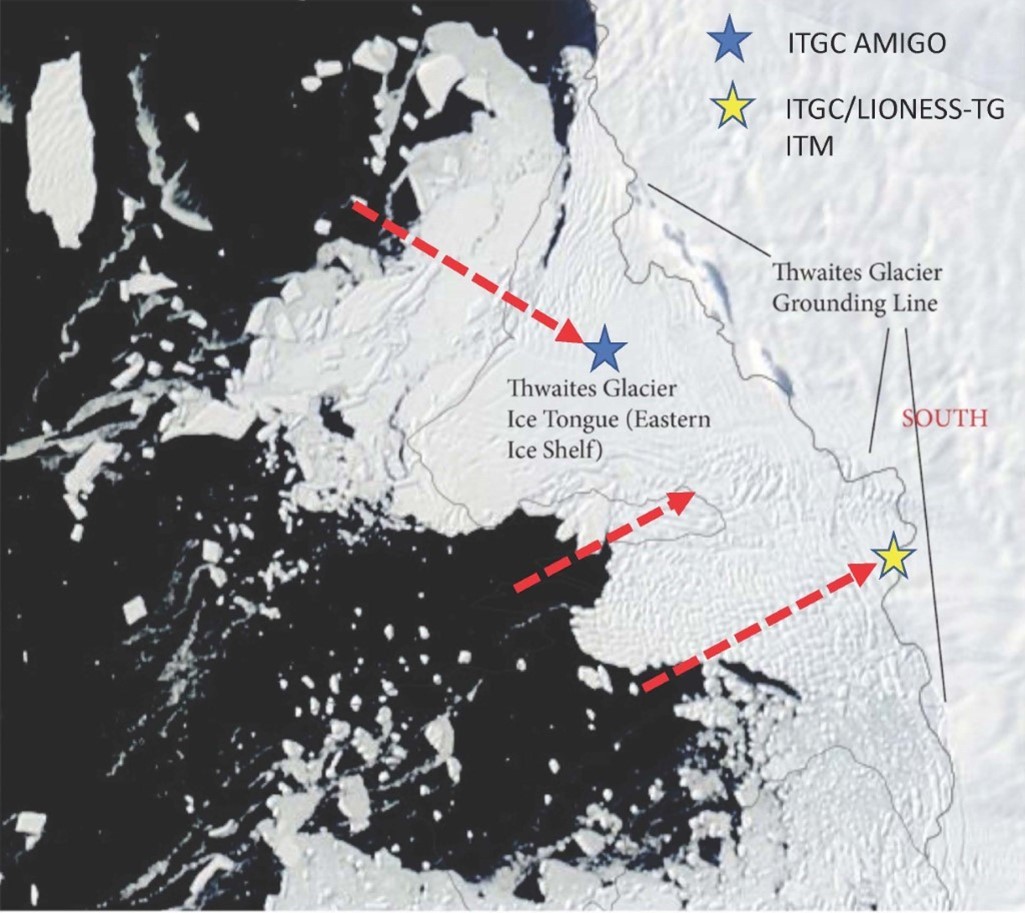
All three vehicles will be aiming to link their new measurements of the ice shelf cavity and water properties to through-ice ‘borehole’ stations established on top of the iceshelf by both the UK and South Korean programs. This ground-breaking use of multiple AUVs will make an significant contribution to the International Thwaites Glacier Collaboration and heralds a new era of autonomous polar exploration that will advance global climate research.
The teams are now preparing to leave their loved ones for several months, setting off from their respective corners of the globe, to set sail – after 2-4 weeks of quarantine – on their respective ships and converge at the Thwaites Glacier in West Antarctica in mid-January 2022.
We wish them all ‘bon voyage’ and the best of luck with the incredibly challenging campaigns that lie ahead, hoping they all return safe and sound in late February/early March.