ATMOS 2 Begins New Research Phase in the Southern Ocean Aboard the NPo Almirante Maximiano

The Antarctic Modelling and Observation System 2 (ATMOS 2) project, coordinated by Dr. Luciano Ponzi Pezzi, began its second field campaign on October 5, 2025. The expedition will continue throughout the 2025/26 summer aboard the polar vessel NPo Almirante Maximiano (H-41), as part of the 44th Brazilian Antarctic Operation (OPERANTAR 44). This initiative aims to deepen scientific understanding of the interactions between oceanic, atmospheric, and cryospheric systems in the Southwest Atlantic and the Atlantic sector of the Southern Ocean.
Developed at the Laboratory for Ocean and Atmosphere Studies (LOA) of DIOTG/CGCT/INPE, ATMOS 2 is part of an international scientific effort. The project is endorsed by the Southern Ocean Observing System (SOOS) and aligns with scientific recommendations from SOFLUX (Air-Sea Flux Observations in the Southern Ocean).
ATMOS 2 investigates dynamic and thermodynamic processes related to interactions among sea ice, ocean, atmosphere, and waves, focusing on the exchange of heat, CO₂, momentum, and turbulent energy. These studies are conducted across various spatial scales—local, regional, and global—with particular emphasis on the region connecting Antarctica and South America.
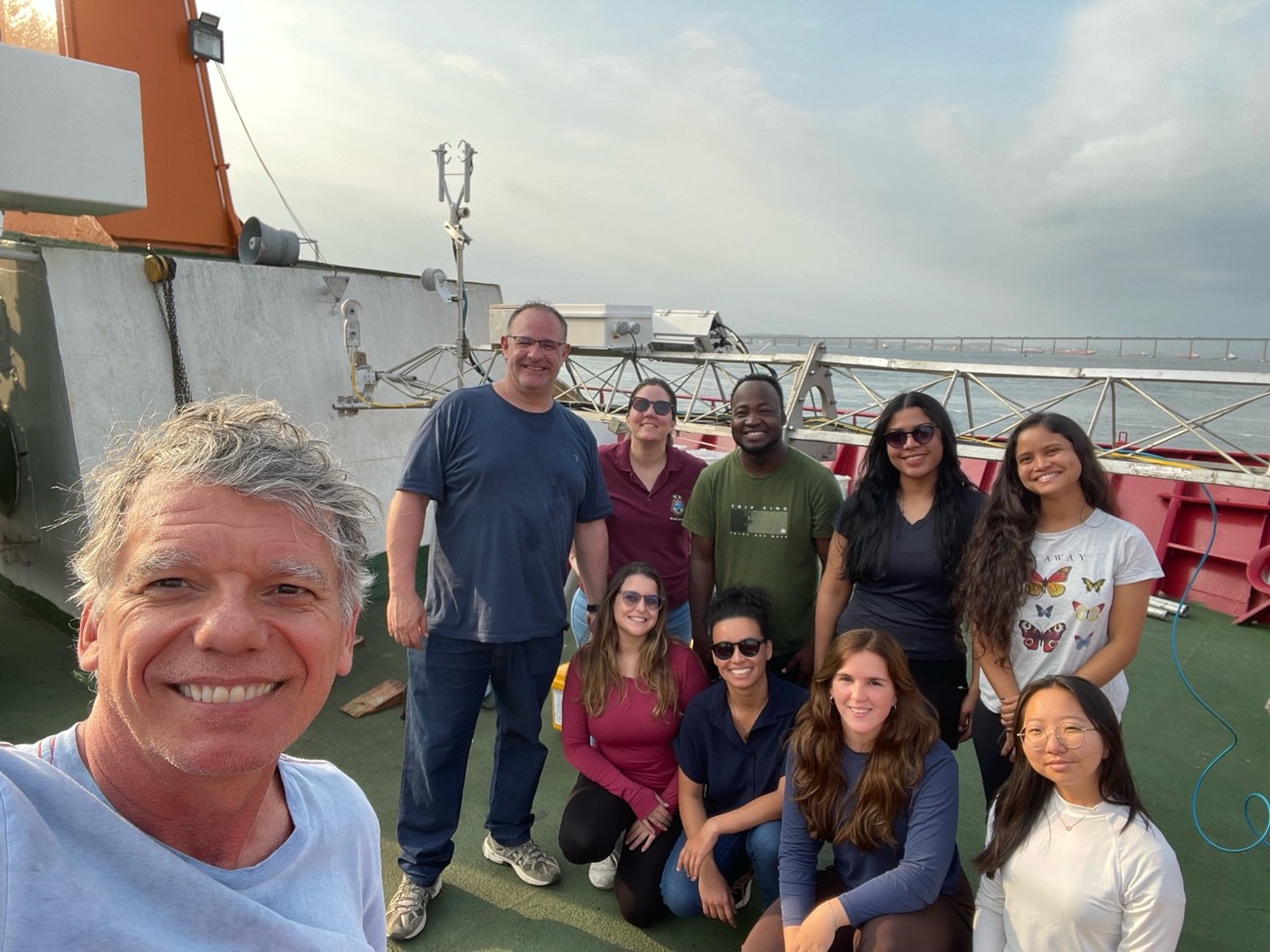
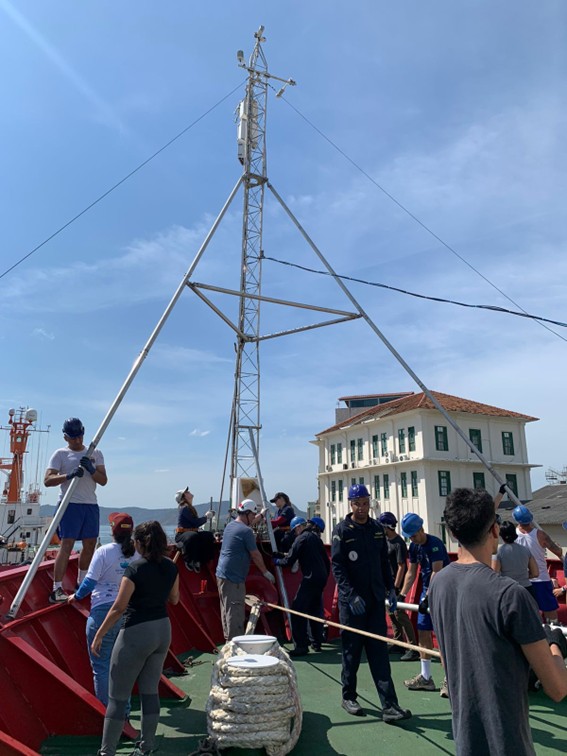
During the crossing to the Antarctic continent, the project's multidisciplinary team is collecting in situ data using specialized equipment such as micrometeorological towers, atmospheric balloons (radiosondes), and ocean profilers (XBTs). In parallel, coupled Earth system models and climate reanalysis datasets will be used to investigate climate teleconnection phenomena that directly impact the climate of Brazil and South America.
The data collected will contribute to the improvement of physical parameterizations in INPE’s numerical models, while also supporting the development of a robust network of researchers specializing in climate, oceanography, and cryospheric sciences. This mission is also aligned with the guidelines of Brazil’s Ten-Year Antarctic Science Plan (2023–2032), promoted by the Ministry of Science, Technology and Innovation (MCTI). It represents a strategic advancement for Brazilian science, reinforcing the country’s position in international research on global climate system changes.